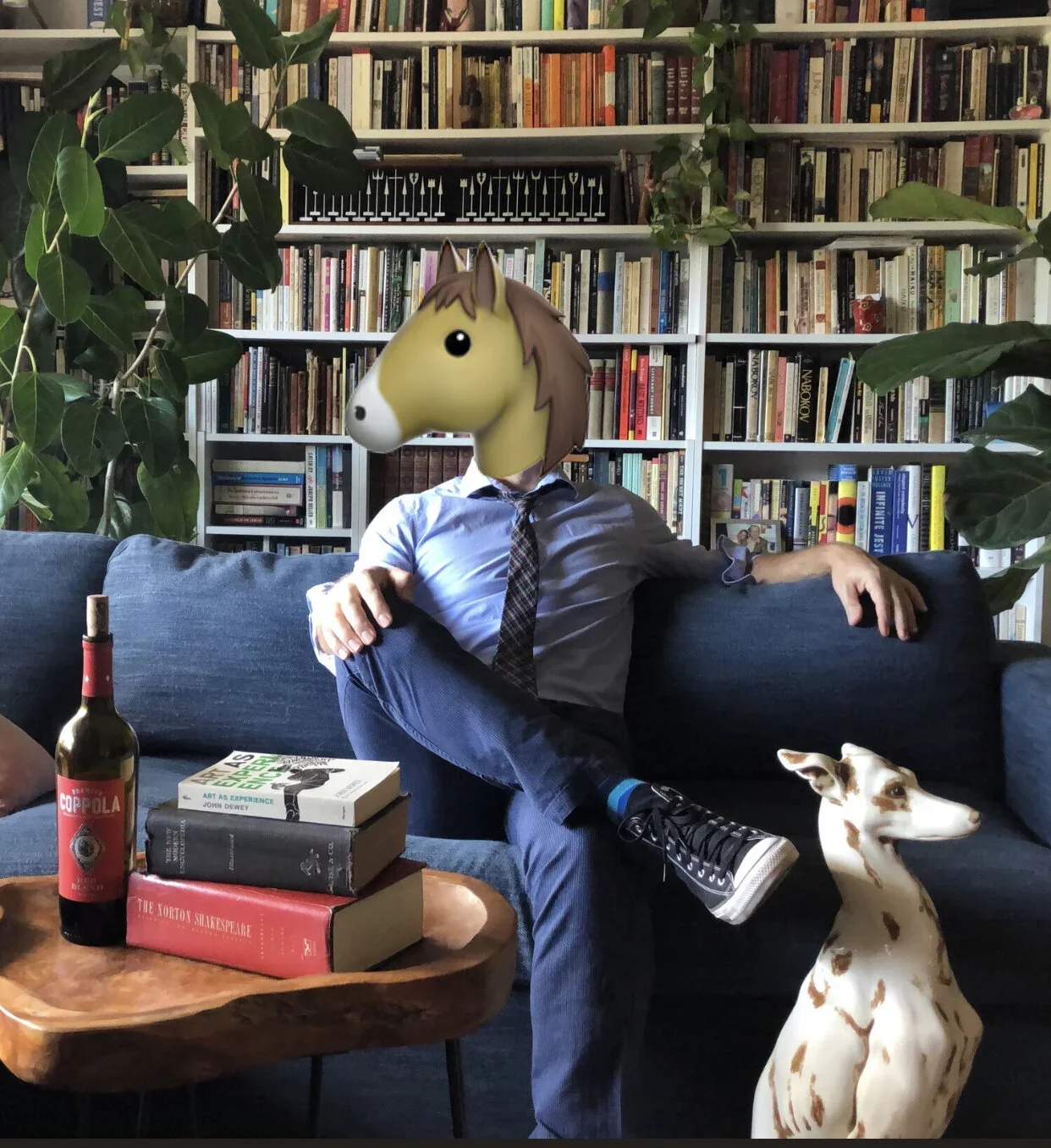
What is this ?
Haiku Theory treats haiku not as a simple nature poem but as a site where several major philosophical questions converge. The podcast draws on thinkers ranging from Lacan to more recent work in care ethics and critical theory to ask what a poem this small can bear the weight of: questions of subjectivity and the observing self, of temporality and the eternal present a haiku seems to freeze, of the ethical relation implied by simply noticing something and setting it down without commentary.
There's also a recurring interest in what haiku's constraints reveal rather than conceal, the idea that a handful of words, or a fixed juxtaposition, might not be limitations on thought but a discipline that produces a distinct kind of thinking, one unavailable to more expansive forms.
The podcast's underlying stance is that haiku, far from being a minor or merely decorative form, is dense with exactly the kind of unresolved philosophical material that rewards sustained attention.
Who am I ?
I'm Graham, a visual artist and part-time writer based in the mountains outside Asheville, North Carolina.
I found haiku almost by accident, back in 1996, working overnight shifts at a small beer package store with nothing but time on my hands. I picked up The Essential Haiku, edited by Robert Hass, one of those long, quiet nights, and something about the form just stuck with me. It's stayed with me ever since.
This podcast exists because of a gap I kept noticing. I'd been listening to The Poetry Pea Podcast for years, and as someone who genuinely loves literary theory, I went looking for more shows built around haiku theory specifically and came up empty. If you can’t find it, make it. Thus, this podcast.